Your First Game Session
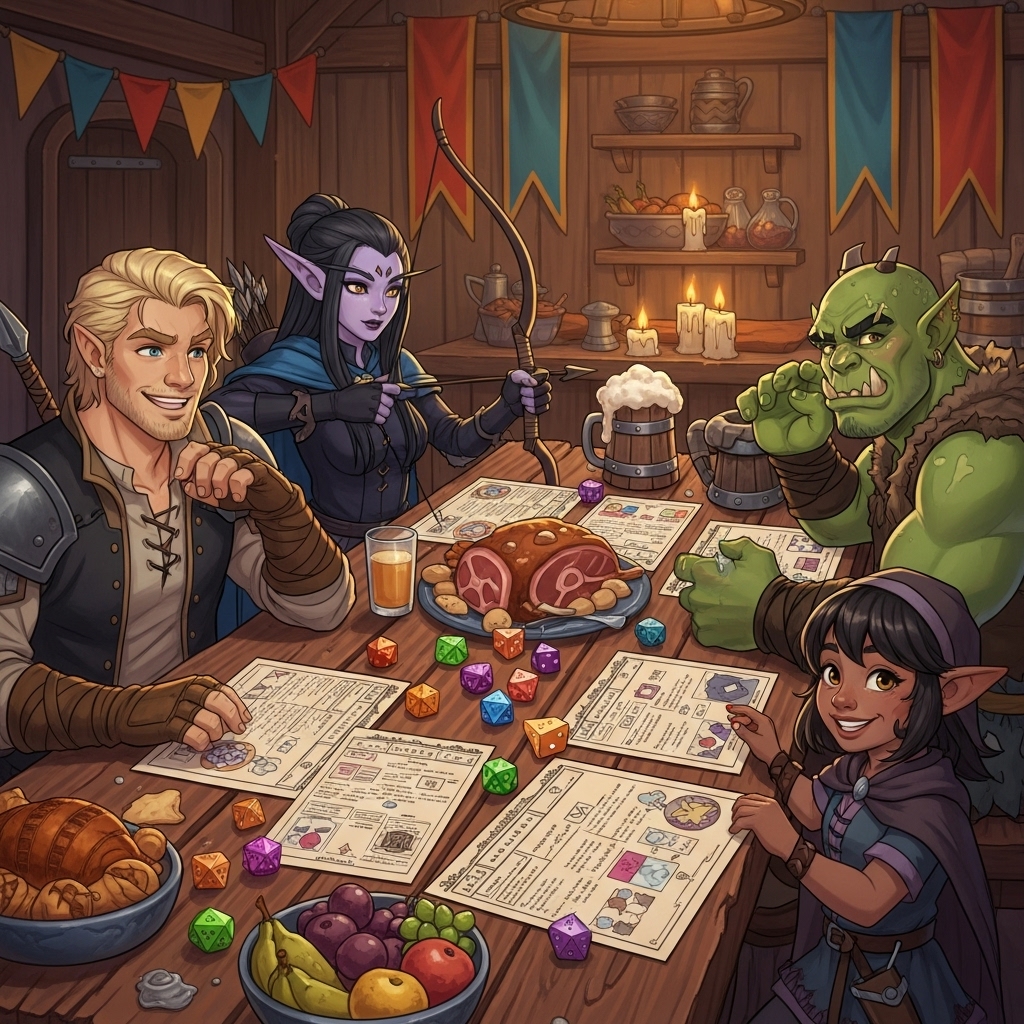
Your first tabletop RPG session can feel overwhelming, but remember - everyone was new once! This guide will help you know what to expect and how to jump in confidently.
Before the Session
What to Bring
- Character sheet (completed and legible)
- Dice set (or dice app on your phone)
- Pencil and eraser (stats will change!)
- Notebook (for taking notes)
- Snacks to share (always appreciated!)
- Water bottle (sessions can be long)
Mental Preparation
- Review your character sheet - know your basic abilities
- Think about your character's personality - how do they act?
- Don't worry about rules - you'll learn as you play
- Be ready to make mistakes - they're part of learning!
Session Structure
Session Zero (Optional)
Some groups have a "Session Zero" before playing:
- Discuss expectations and table rules
- Finish character creation together
- Learn about the campaign setting
- Establish character relationships
Typical Session Flow
- Recap - What happened last time?
- Setup - Where are you now? What's happening?
- Play - The main adventure (2-4 hours)
- Wrap-up - Plan for next session
The Three Types of Scenes
Social Scenes
What happens: Talking to NPCs, gathering information, making plans
Your role:
- Stay in character - how would they respond?
- Ask questions - NPCs often have useful information
- Support other players - let everyone have moments to shine
- Use your skills - Persuasion, Deception, Intimidation, Insight
Example:
GM: "The tavern keeper eyes you suspiciously. 'Haven't seen you around here before.'" You: "We're just travelers looking for work. Any rumors of trouble nearby?"
Exploration Scenes
What happens: Investigating areas, solving puzzles, discovering secrets
Your role:
- Describe what you want to examine - be specific
- Use relevant skills - Investigation, Perception, Athletics
- Think creatively - solutions might not be obvious
- Work together - combine different approaches
Example:
GM: "You find a locked door with strange symbols carved around the frame." You: "I want to examine the symbols. Do I recognize them from my background?"
Combat Scenes
What happens: Fighting monsters, tactical positioning, using abilities
Your role:
- Wait for your turn in initiative order
- Describe your actions dramatically
- Work as a team - coordinate with allies
- Don't panic - the GM will help with rules
Example:
Your turn: "I move up next to the orc and swing my sword at its side!" Roll: d20 + attack bonus vs. its AC
How to Participate
Speaking Up
- Don't wait for permission - if you have an idea, share it!
- Use "I" statements - "I want to..." or "My character would..."
- Ask questions - "Can I try to...?" or "What do I see when...?"
- Build on others' ideas - "Yes, and..." instead of "No, but..."
When You Don't Know What to Do
- Ask the GM - "What are my options here?"
- Ask other players - "What do you think we should do?"
- Look at your character sheet - what abilities haven't you used?
- Think about your character's goals - what would they want?
Making Decisions
- Trust your instincts - there's rarely one "right" answer
- Consider consequences - but don't overthink it
- Remember it's collaborative - you don't have to solve everything alone
- Embrace failure - it often leads to interesting story developments
Common First-Session Situations
"I Don't Know the Rules"
Solution: Just describe what you want to do. The GM will tell you what to roll.
Example: "I want to sneak past the guard" → GM: "Roll a Stealth check"
"I'm Not Good at Roleplaying"
Solution: Start small. You don't need to do voices or accents.
Options:
- Describe actions: "My character looks suspicious of the merchant"
- Third person: "Elena tries to convince them we're harmless"
- Simple dialogue: "I say, 'We mean no harm'"
"Everyone Else Knows More Than Me"
Solution: That's normal! Ask questions and lean on experienced players.
Remember: Experienced players usually love helping newcomers!
"I Made a Mistake on My Character Sheet"
Solution: Tell the GM. Small errors can usually be fixed easily.
Common fixes: Forgotten modifiers, wrong spell selections, math errors
Dice Rolling Etiquette
When to Roll
- Wait for the GM to ask for a roll
- Don't roll and then ask what it's for
- If uncertain, ask: "Do I need to roll for this?"
How to Roll
- State your intent: "I want to climb the wall"
- GM calls for roll: "Make an Athletics check"
- Roll and add modifiers: "I rolled 14, plus 3, so 17 total"
- GM describes result: "You scramble up successfully"
Rolling in the Open
- Most groups prefer visible dice rolls
- Don't hide results - even failures are fun
- Reroll dice that are cocked (leaning against objects)
Character Voice and Personality
Finding Your Character's Voice
- Start with one trait: Brave, curious, cautious, etc.
- How do they speak? Formal, casual, enthusiastic, gruff?
- What motivates them? Money, justice, family, adventure?
- How do they react to stress? Fight, flee, joke, analyze?
Consistency vs. Growth
- Stay true to core traits but allow for growth
- Let experiences change them over time
- Don't be afraid to try new approaches as you get comfortable
Working with Your Party
Being a Team Player
- Share the spotlight - let others have their moments
- Support others' plans even if they're not your first choice
- Use your unique abilities to help the group
- Communicate in character when possible
Handling Disagreements
- Stay in character for minor disagreements
- Talk out of character for major conflicts
- Remember it's collaborative - find compromises
- Don't argue with the GM during play (discuss after if needed)
What Not to Worry About
Perfect Optimization
Your character doesn't need perfect stats or optimal choices. Interesting flaws make better stories than perfect heroes.
Knowing Every Rule
Nobody knows every rule! Even experienced players look things up regularly.
Doing Voices
Not everyone does character voices, and that's perfectly fine. Describing actions and decisions is just as valid.
Being the Main Character
Tabletop RPGs are ensemble stories. Everyone gets moments to shine.
Managing Session Anxiety
Normal First-Session Feelings
- Nervousness about roleplaying
- Confusion about rules and options
- Worry about making mistakes
- Excitement mixed with uncertainty
Coping Strategies
- Take notes to help remember important details
- Ask questions - everyone wants you to succeed
- Take breaks if you need them
- Remember it's a game - the goal is fun!
After Your First Session
Immediate Follow-up
- Thank the GM - running games takes work!
- Share feedback - what did you enjoy?
- Exchange contact info with other players
- Confirm next session details
Between Sessions
- Review what happened - read your notes
- Think about character growth - how did they change?
- Consider new goals - what does your character want now?
- Practice rules you found confusing
Building Relationships
- Text the group between sessions about the game
- Share character art or descriptions
- Discuss strategy or story elements
- Plan character interactions for next time
Red Flags to Watch For
While most gaming groups are welcoming, watch out for:
- Players who dominate and don't let others participate
- GMs who ignore your input or railroad the story
- Anyone making you uncomfortable with inappropriate content
- Groups that mock new players instead of helping
Remember: Good gaming groups want everyone to have fun and will support new players!
You're Ready!
Your first session might feel chaotic, but that's normal! Focus on:
- Having fun with the story and characters
- Learning gradually - don't try to master everything at once
- Being part of the team and supporting other players
- Asking questions when you're uncertain
The most important rule in tabletop RPGs is that everyone at the table should be having fun. Trust yourself, embrace the adventure, and enjoy your first step into the world of tabletop RPGs!
Next: Learn about working effectively with your group and table etiquette.