New Game Master Getting Started Guide
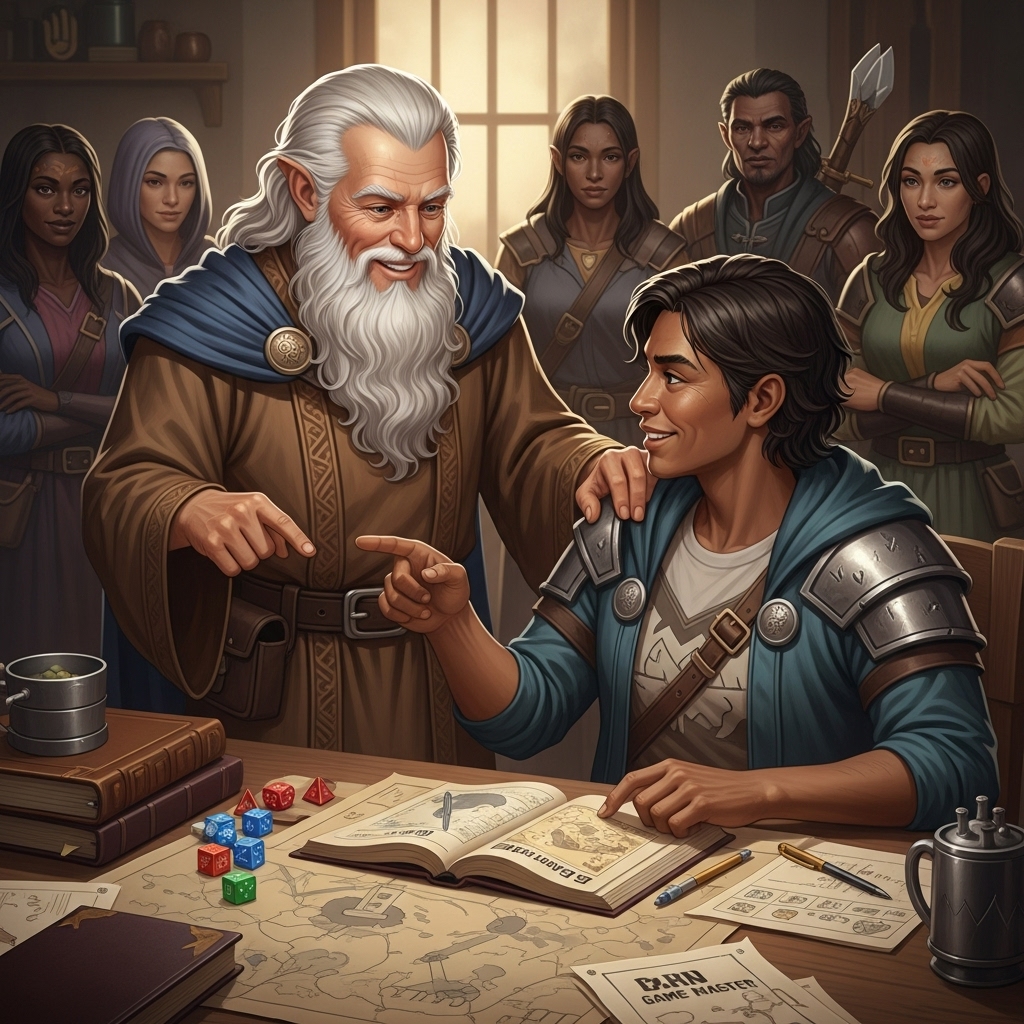
Welcome, future Game Master! Running your first game might seem daunting, but this step-by-step guide will prepare you to create amazing experiences for your players. Take your time with each step - being a great GM is a journey, not a destination.
Your Path to Game Mastery
Step 1: Understand the GM Role 🎬
Time needed: 20-30 minutes
Learn what being a Game Master really means:
- Read About Game Masters to understand your responsibilities
- Learn the difference between facilitating and controlling the story
- Understand that your job is to create fun challenges, not defeat the players
✅ You'll know you're ready when: You understand that the GM's role is to facilitate fun, fair, and engaging experiences for everyone.
Step 2: Master the Core Rules 📚
Time needed: 60-90 minutes
Build your foundation of game knowledge:
- Playing the Game - Master ALL the basic mechanics
- Focus especially on d20 tests, combat, social interaction, and exploration
- Rules Glossary - Bookmark for quick reference during play
- Practice calculating difficulty classes (DCs) for various tasks
✅ You'll know you're ready when: You can confidently call for ability checks, set DCs, and resolve basic actions without constantly looking up rules.
Step 3: Learn Character Creation 📝
Time needed: 45-60 minutes
You need to understand characters to help players:
- Character Creation - Learn the complete process
- Character Origins - Understand species and background options
- Classes - Read overviews of all classes to understand player capabilities
- Practice making a character yourself to understand the process
✅ You'll know you're ready when: You can help a new player create a character and understand what each class can do.
Step 4: Plan Your First Session 📋
Time needed: 90-120 minutes
Prepare your inaugural adventure:
- Read Preparing Sessions for planning fundamentals
- Read Creating Adventures for story structure
- Create a simple 3-4 hour adventure with clear beginning, middle, and end
- Prepare 2-3 key NPCs with names, motivations, and personalities
- Plan one combat encounter, one social scene, and one exploration challenge
✅ You'll know you're ready when: You have a written adventure outline, NPC notes, and all necessary stat blocks prepared.
Step 5: Learn Session Management 🎯
Time needed: 30-45 minutes
Master the art of running smooth sessions:
- Read Running Games for table management
- Understand how to make rulings quickly and fairly
- Learn techniques for managing different player types
- Practice improvisation and adapting when players do unexpected things
✅ You'll know you're ready when: You understand how to keep the game moving, handle rule disputes, and make fair decisions on the fly.
Step 6: Understand Long-term Play 📈
Time needed: 30-40 minutes
Prepare for ongoing campaigns:
- Read Managing Campaigns for long-term story management
- Learn how to track character development and ongoing plotlines
- Understand session-to-session continuity and note-taking
- Plan for character advancement and growing challenges
✅ You'll know you're ready when: You know how to keep track of ongoing stories and help characters grow over time.
Step 7: Run Your First Session! 🎲
Time needed: 3-4 hours
Time to put it all into practice:
- Gather your materials: adventure notes, dice, scratch paper, reference sheets
- Start with Session Zero: discuss expectations, safety tools, and character relationships
- Run your prepared adventure but be ready to adapt
- Take notes during play about what happens and what needs follow-up
- Ask for feedback after the session
✅ You'll know you're ready when: You've successfully guided a group through a complete adventure session!
Step 8: Continue Growing 🌱
Time needed: Ongoing
The learning never stops:
- Read Improving as GM for continued development
- Reflect on each session and identify areas to improve
- Watch other GMs online or in person to learn new techniques
- Join GM communities to share experiences and get advice
✅ You'll know you're ready when: You're committed to ongoing improvement and learning from each session.
Pre-Session Checklist
Before your first session, ensure you have:
- Adventure outline with clear scenes and objectives
- NPC notes with names, motivations, and key information
- Monster stat blocks printed or bookmarked
- Battle map or description for combat encounters
- GM screen or reference sheet with common DCs and rules
- Plenty of dice and scratch paper
- Session Zero discussion completed with players
- Safety tools discussed and implemented
- Character sheets reviewed and understood
Common New GM Questions
"What if I don't know a rule?"
Make a quick ruling to keep the game moving, then look it up later. Tell players "For now, we'll do X, but I'll double-check the rule after the session."
"What if players do something I didn't plan for?"
This is normal! Say "Give me a moment to think" and adapt your prepared material. Often you can reuse planned encounters in new contexts.
"What if I make a mistake?"
Everyone makes mistakes! If you notice during the session, you can retcon (change what happened). If you notice later, just adjust going forward.
"How do I handle difficult players?"
Address issues quickly and directly. Talk privately if needed. Remember: everyone should be having fun, including you.
Essential GM Resources
Core References:
- Playing the Game - Core mechanics reference
- Rules Glossary - Quick rule lookups
- Gameplay Toolbox - Optional rules and tools
When You Need More:
- Equipment - Weapons, armor, and gear for NPCs and treasure
- Spells - For NPC spellcasters and magical effects
- Magic Items - Rewards and magical equipment
- Monsters - Creatures for encounters and adventures
Tips for First-Time GMs
- Start simple: Use pre-written adventures or simple scenarios for your first few sessions
- Know your players: Understand what they enjoy and tailor experiences accordingly
- Say "yes, and...": Build on player ideas rather than shutting them down
- Don't over-prepare: You can't plan for everything players might do
- Take notes: Write down important decisions and plot developments
- Ask for feedback: Regular check-ins help you improve
- Have fun: If you're enjoying yourself, your players probably are too
Session Zero Essentials
Before your first regular session, hold a Session Zero to discuss:
- Campaign expectations: Tone, length, frequency of play
- Character creation: Method, restrictions, party balance
- Table rules: Phone use, food, attendance, respect
- Safety tools: Lines, veils, X-card, or other safety mechanisms
- Character relationships: How do the characters know each other?
- Player goals: What do players want from the game?
Ready to Run?
Once you've completed these steps, you'll be well-prepared to run your first session. Remember: no GM is perfect starting out. Your skills will develop through practice, and every session is a learning opportunity.
Feeling overwhelmed? That's normal! Start with a simple one-shot adventure and focus on the basics. You can always add complexity as you gain experience.
Next Step: Schedule your Session Zero and gather your players!