Preparing Your First Session
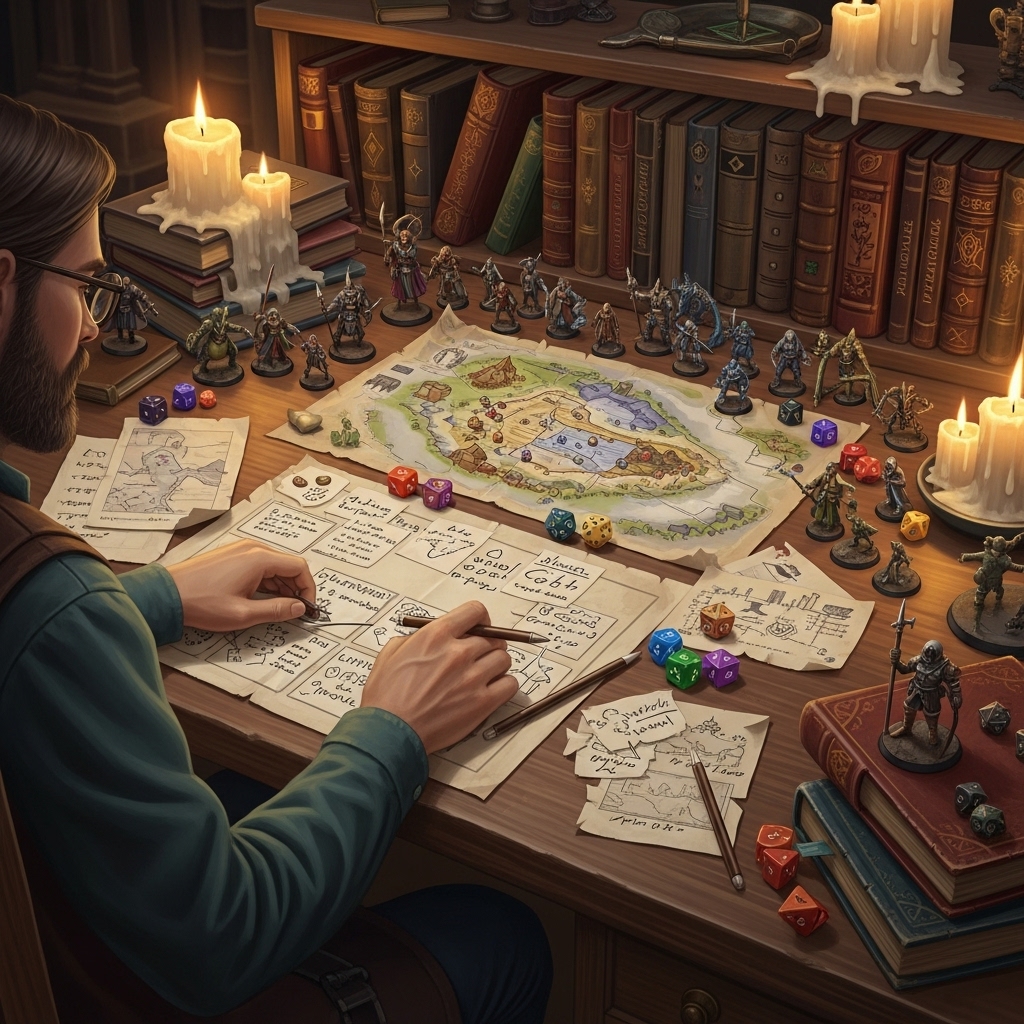
Preparing for your first GM session can feel overwhelming, but it doesn't have to be! This guide will help you prepare effectively without getting lost in endless details.
Before You Start Preparing
Choose Your Adventure Type
Pre-Written Adventure (Recommended)
- Pros: Less preparation, balanced encounters, tested storylines
- Cons: Less personal creativity, might not fit your group perfectly
- Best for: First-time GMs, learning game mechanics
Homebrew Adventure
- Pros: Complete creative control, tailored to your players
- Cons: More work, potential balance issues, requires more experience
- Best for: Experienced GMs or those with strong creative vision
Session Length Planning
- First session: 2-3 hours maximum
- New players: Plan for slower pace and more questions
- Experienced players: Can handle more content in less time
Essential Preparation (The Must-Haves)
1. Know the Basic Story
You need a simple premise:
- Where do the characters start? (tavern, town square, prison cell)
- What's the initial situation? (missing person, monster attacks, urgent message)
- What's the goal? (rescue someone, stop a threat, find something)
- How might it end? (multiple possible outcomes)
Example: Characters start in a tavern when a distressed farmer runs in asking for help - wolves have been attacking his livestock, but these wolves seem unusually aggressive and organized.
2. Prepare Key NPCs
Focus on 2-3 important non-player characters:
- Name and basic appearance
- Personality in one sentence ("Nervous but determined")
- What they want from the characters
- Key information they can provide
Example NPCs:
- Farmer Hendricks: Weather-beaten, anxious, wants wolves stopped, knows they come from the north woods
- Tavern Keeper Marta: Friendly, gossips, wants customers safe, knows local rumors
- Village Elder Thomas: Wise, cautious, wants proof before acting, knows local history
3. Plan 3-5 Scenes
Think in scenes, not strict sequences:
- Opening scene: Hook the players into the adventure
- Investigation scene: Gathering information or clues
- Travel scene: Getting to the action location
- Climax scene: Major challenge or confrontation
- Resolution scene: Wrapping up loose ends
4. Prepare One Combat Encounter
Your first combat should be:
- Slightly easier than the party's level suggests
- Simple enemies (2-4 basic creatures)
- Clear terrain without complex environmental effects
- Escape routes available if things go badly
5. Have Basic Maps
You don't need artistic masterpieces:
- Rough sketch of the area layout
- Key locations marked (doors, furniture, obstacles)
- Scale reference for movement and ranges
- Quick photocopies or digital images on tablet/laptop
Nice-to-Have Preparation (The Extras)
Additional NPCs
- Shopkeepers, guards, random townspeople
- Simple personality traits ("Gruff but fair", "Overly cheerful")
- Basic motivations and knowledge
Environmental Details
- Weather conditions and how they affect travel
- Sensory descriptions (sounds, smells, sights)
- Local customs or interesting cultural details
- Random encounters for travel between locations
Alternative Solutions
- Multiple ways to solve problems
- What happens if players try unexpected approaches
- Backup plans if players avoid your main storyline
Practical Preparation Steps
Session Prep Checklist
Story Preparation (30-45 minutes)
□ Write one-paragraph summary of the adventure □ List 3-5 key scenes in order □ Note possible alternative paths or player choices □ Prepare opening hook and closing wrap-up
NPC Preparation (15-20 minutes)
□ Name and describe 2-3 key NPCs □ Write one personality trait for each □ Note what information each NPC knows □ Practice different voices or mannerisms (optional)
Combat Preparation (15-20 minutes)
□ Choose appropriate enemies for party level □ Print or bookmark stat blocks □ Sketch basic battle map □ Roll initiative for monsters ahead of time
Materials Preparation (10-15 minutes)
□ Gather dice (you'll need lots) □ Print character sheets or have digital access □ Prepare scratch paper for notes □ Set up any maps, miniatures, or visual aids
GM Screen Setup
Create a quick reference with:
- Common DCs: Easy (10), Moderate (15), Hard (20)
- Conditions: Blinded, Charmed, Poisoned, etc.
- Action types: Action, Bonus Action, Reaction, Free
- Your NPCs: Names, key traits, important information
The Night Before
Final Review (15 minutes)
- Re-read your adventure outline
- Review key NPC motivations and information
- Double-check you have all needed materials
- Get a good night's sleep - being rested is more important than perfect prep!
Manage Your Expectations
- Something will go differently than you planned - that's normal!
- Players will surprise you - embrace it!
- You'll make mistakes - every GM does, even experienced ones
- Everyone wants you to succeed - your players are rooting for you
During Preparation: Common Mistakes
Over-Preparing
- Don't plan every detail - players will ignore half of it
- Don't write extensive backstories for minor NPCs
- Don't prepare for every possible player action
- Keep it simple for your first session
Under-Preparing
- Don't wing the entire session without any planning
- Don't forget to prepare combat encounters
- Don't ignore basic NPC motivations
- Have at least a rough outline of what might happen
Wrong Focus
- Don't spend hours on perfect maps - rough sketches work fine
- Don't memorize rules perfectly - focus on knowing the basics
- Don't plan rigid sequences - think in flexible scenes instead
- Don't prepare elaborate puzzles for your first session
Improvisation Preparation
Building Your Improv Toolkit
Name Lists
Keep lists of:
- Male and female names for unexpected NPCs
- Business names (shops, taverns, inns)
- Location names (streets, districts, landmarks)
Quick NPC Generator
Combine elements randomly:
- Appearance: Tall, short, thin, broad, young, old, etc.
- Personality: Friendly, gruff, nervous, confident, etc.
- Motivation: Money, family, duty, fear, curiosity, etc.
Generic Stat Blocks
Have ready access to:
- Basic humanoids (guards, bandits, commoners)
- Common animals (wolves, bears, horses)
- Simple monsters appropriate to your area
When Players Go Off-Script
- Say "yes, and..." when possible
- Ask clarifying questions to understand their goals
- Take a 5-minute break if you need to think
- Adapt your prepared material to their chosen path
Sample Preparation: "The Wolf Problem"
Basic Story
Farmer Hendricks' livestock are being killed by unusually organized wolves. Investigation reveals they're being controlled by a young druid who's angry about deforestation. Characters can fight, negotiate, or find a compromise.
Key NPCs
- Farmer Hendricks: Desperate, honest, knows wolves come from north
- Marta (Tavern Keeper): Gossipy, knows about recent logging operations
- Kael (Young Druid): Angry, protective of nature, can be reasoned with
Planned Scenes
- Tavern: Hendricks bursts in asking for help
- Farm: Investigate attack sites, find tracks
- Forest: Track wolves to druid's grove
- Confrontation: Meet Kael and 2-3 wolves
- Resolution: Fight, negotiate, or compromise
Combat
- Kael: Use Druid stat block, but reduce HP by 25%
- 2 Wolves: Standard wolf stats
- Forest Grove: Trees provide cover, creek runs through middle
Flexibility
- If players want to talk to villagers first, Marta knows about logging
- If players want to research, local elder knows druid history
- If players avoid confrontation, Kael might approach them peacefully
Remember: Done is Better Than Perfect
Your first session doesn't need to be a masterpiece. Focus on:
- Having fun with your friends
- Learning the basics of running the game
- Being responsive to what players want to do
- Staying flexible when things don't go as planned
The most important preparation is your enthusiasm and willingness to learn. Everything else can be improved with practice!
Next: Learn how to create simple but engaging adventures for your group.