Creating Simple Adventures
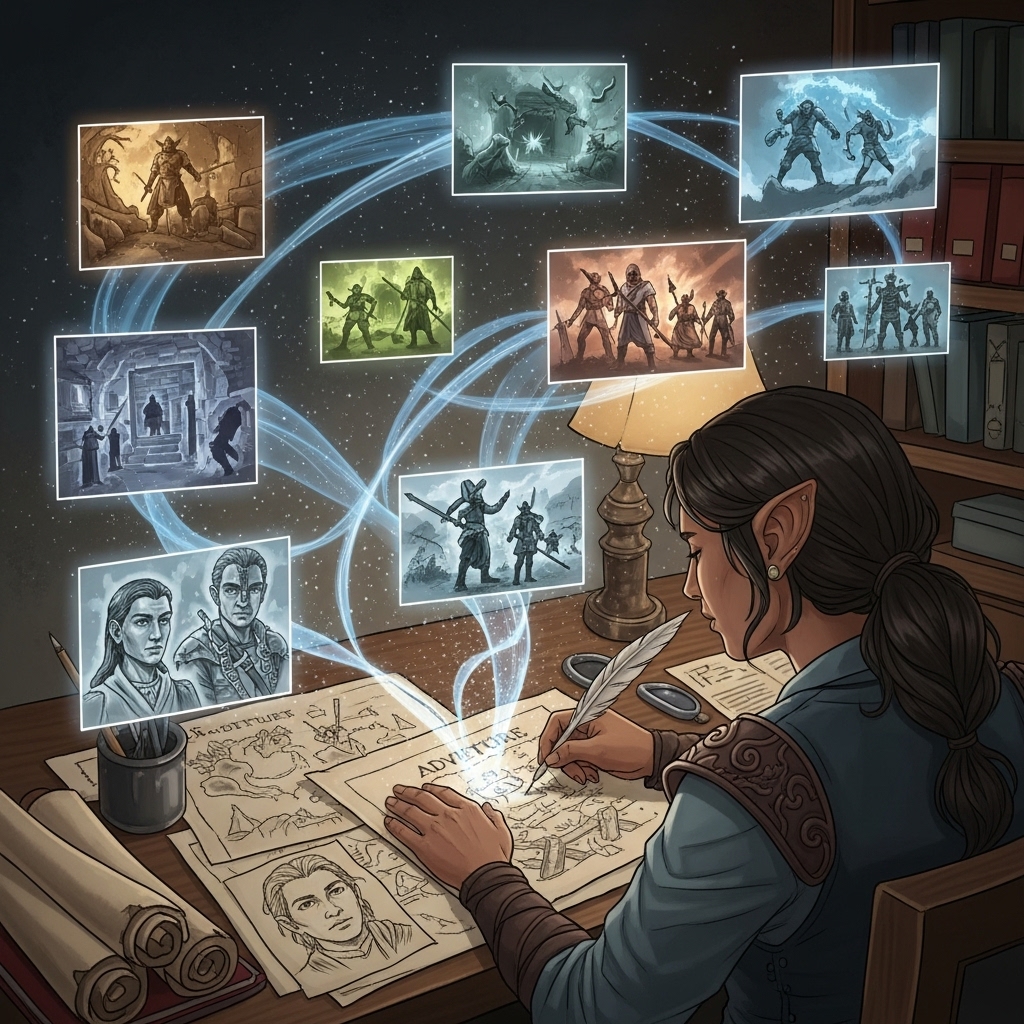
Creating your first adventure might seem daunting, but great tabletop RPG adventures follow simple, proven structures. This guide will help you build engaging adventures that your players will love.
Adventure Structure Basics
The Three-Act Structure
Most good tabletop RPG adventures follow this simple pattern:
Act 1: The Hook (15-20 minutes)
- Present the problem or opportunity
- Give characters motivation to get involved
- Establish stakes - what happens if they don't act?
- Set the tone for the adventure
Act 2: The Investigation/Journey (60-90 minutes)
- Gather information about the problem
- Overcome obstacles on the way to the solution
- Build tension as complications arise
- Develop character relationships and party dynamics
Act 3: The Climax (30-45 minutes)
- Confront the main challenge or enemy
- Use information gathered in Act 2
- Allow multiple solutions to the problem
- Resolve the central conflict
The Five-Room Dungeon
A simple, flexible structure for adventures:
- Entrance/Guardian - Something protects or blocks access
- Puzzle/Challenge - A problem requiring creative thinking
- Trick/Setback - Something that complicates the situation
- Climax - The main confrontation or challenge
- Reward/Revelation - Resolution and consequences
Basic Adventure Types
The Missing Person
Hook: Someone important has disappeared Investigation: Follow clues to discover what happened Climax: Rescue them or discover their fate
Example: The blacksmith's daughter didn't come home last night. Her friends say she was going to explore the old ruins outside town.
The Monster Problem
Hook: A creature is threatening the community Investigation: Learn about the monster and find its lair Climax: Confront or relocate the creature
Example: Travelers report a bridge troll demanding impossible tolls. Investigation reveals it's actually protecting its wounded mate underneath.
The Mysterious Events
Hook: Strange things are happening that need explanation Investigation: Uncover the supernatural or criminal cause Climax: Stop the person or force behind the events
Example: Townspeople are falling into unnaturally deep sleep. Investigation reveals a lonely hag is stealing dreams to feel less isolated.
The Urgent Delivery
Hook: Characters must transport something important Investigation: Deal with obstacles and complications during travel Climax: Protect the delivery from those who want to stop it
Example: A dying scholar needs his research delivered to the capital before the harvest festival, but bandits and rival academics want to intercept it.
Creating Compelling Hooks
Good Hooks Are:
Personal
Connect to character backgrounds, goals, or relationships
- "The missing person is your character's cousin"
- "The monster destroyed your family's shrine"
- "The urgent message mentions your character by name"
Urgent
Create time pressure that requires immediate action
- "The kidnapping happened last night - the trail is getting cold"
- "The monster attacks every full moon - that's tomorrow"
- "The festival is in three days - the delivery must arrive by then"
Morally Clear
Make it obvious that helping is the right thing to do
- Innocent people are in danger
- A grave injustice needs to be corrected
- A community needs protection from a threat
Hook Delivery Methods
The Desperate Plea
Someone bursts in begging for help
- Pros: Creates immediate urgency and emotional investment
- Cons: Can feel clichéd if overused
- Example: Farmer runs into tavern crying about attacked livestock
The Mysterious Discovery
Characters find evidence of something requiring investigation
- Pros: Lets players feel like detectives
- Cons: Requires more player initiative
- Example: Characters find a blood-stained letter while traveling
The Official Request
Authority figure asks characters to handle a problem
- Pros: Gives clear authority and backing
- Cons: Can feel like characters have no choice
- Example: Mayor offers reward for solving recent thefts
The Personal Connection
Someone the characters know and care about needs help
- Pros: Strongest emotional investment
- Cons: Requires established relationships
- Example: Character's mentor sends urgent letter asking for aid
Building Engaging NPCs
The NPC Triangle
Every important NPC needs three things:
Motivation
What do they want?
- Immediate goal: Find their missing child
- Long-term desire: Become respected in the community
- Hidden agenda: Prove they're better than their sibling
Obstacle
What's stopping them from getting what they want?
- External: Physical barriers, other people, lack of resources
- Internal: Fear, guilt, competing desires
- Social: Reputation, obligations, relationships
Method
How are they trying to overcome their obstacle?
- Direct approach: Hiring adventurers, confronting problems head-on
- Indirect approach: Manipulation, gathering information, building alliances
- Misguided approach: Making things worse while trying to help
Quick NPC Creation
For minor NPCs, use this simple formula: [Adjective] [Profession] who [Action/Goal]
Examples:
- Nervous merchant who wants to hire bodyguards
- Proud guard captain who refuses to admit there's a problem
- Curious child who knows more than they should
Creating Meaningful Choices
The Best Adventures Offer Multiple Solutions
Combat Solution
Characters can fight their way through problems
- Always have this option available
- Make sure it has appropriate consequences
- Don't make it the only solution to every problem
Social Solution
Characters can negotiate, persuade, or deceive
- Give NPCs motivations that can be addressed through talk
- Reward creative social approaches
- Allow partial successes that complicate situations
Stealth Solution
Characters can avoid or circumvent problems
- Provide alternative routes and approaches
- Reward good planning and preparation
- Have consequences for getting caught
Creative Solution
Characters can think outside the box
- Be open to unexpected player ideas
- Reward creativity even if it bypasses your planned content
- Use the "Yes, and..." principle when possible
Meaningful Consequences
Every choice should matter:
- Time pressure: Fast solutions might miss important information
- Resource costs: Some approaches require spending money, spells, or equipment
- Relationship impacts: How NPCs react to character methods
- Future complications: Solutions create new problems or opportunities
Sample Adventure: "The Singing Stones"
The Hook
The village's sacred stones that predict weather have started singing ominously. Crops are failing because farmers don't know when to plant or harvest. The village elder asks the characters to investigate.
Act 1: Investigation (Multiple Paths)
- Talk to the Elder: Learn about the stones' history and importance
- Examine the Stones: Discover they're magically connected to something underground
- Interview Villagers: Learn that the singing started after recent earthquakes
- Research in Local Archives: Discover the stones were placed to seal something long ago
Act 2: The Journey
Characters must decide how to proceed:
- Follow underground passages revealed by earthquake damage
- Seek out the hermit who might know ancient lore about the stones
- Investigate the quarry where recent mining might have disturbed something
Act 3: The Climax (Multiple Solutions)
Characters discover earth elementals disturbed by mining operations:
- Combat Solution: Fight the elementals directly
- Negotiation Solution: Communicate with elementals and relocate them
- Environmental Solution: Restore the natural balance by filling in mining tunnels
- Magical Solution: Reinforce the original sealing magic on the stones
Consequences
- Success helps the village plan their harvest and strengthens community bonds
- Method matters: How characters solve it affects their reputation and future opportunities
- Partial success might quiet the stones but leave underlying problems
Adventure Planning Template
Basic Information
- Adventure Name: _______________
- Expected Duration: _______________
- Party Level: _______________
- Adventure Type: _______________
The Hook
- Problem/Opportunity: _______________
- Why Characters Care: _______________
- Time Pressure: _______________
- Initial Information: _______________
Key NPCs
- Name: _____ Motivation: _____ Obstacle: _____ Method: _____
- Name: _____ Motivation: _____ Obstacle: _____ Method: _____
- Name: _____ Motivation: _____ Obstacle: _____ Method: _____
Three-Act Structure
- Act 1 (Hook): _______________
- Act 2 (Investigation): _______________
- Act 3 (Climax): _______________
Multiple Solutions
- Combat Approach: _______________
- Social Approach: _______________
- Stealth Approach: _______________
- Creative Approach: _______________
Potential Consequences
- Success: _______________
- Partial Success: _______________
- Failure: _______________
- Unexpected Results: _______________
Common Beginner Mistakes
Over-Complicated Plots
- Problem: Too many NPCs, subplots, and twists
- Solution: Start with simple, clear motivations and add complexity gradually
Railroad Adventures
- Problem: Only one solution or path forward
- Solution: Always provide at least two approaches to every problem
No Stakes
- Problem: Nothing bad happens if characters don't act
- Solution: Create urgency and clear consequences for inaction
Unclear Motivations
- Problem: Players don't understand why their characters should care
- Solution: Connect the adventure to character backgrounds and universal values
No Player Agency
- Problem: Characters just follow clues without making meaningful choices
- Solution: Present options and let players decide how to proceed
Tips for Success
Start Small
- Focus on one location (village, small dungeon, single building)
- Limit NPCs to 3-5 important characters
- Keep the timeline short (hours or days, not weeks)
- Use simple motivations that everyone can understand
Prepare Flexibly
- Plan situations, not exact sequences
- Prepare NPC motivations, not specific dialogue
- Know the important information, but be flexible about how players learn it
- Have backup plans, but don't be afraid to improvise
Focus on Fun
- Give every character a chance to use their unique abilities
- Reward creative thinking and good teamwork
- Don't be afraid to adjust difficulty during play
- End on a high note with clear resolution and appropriate rewards
Remember: The best adventures come from understanding what your players enjoy and building experiences that let them be heroes. Start simple, learn from each session, and gradually add complexity as you gain confidence!
Next: Learn how to run the game smoothly once your adventure begins.