Running the Game
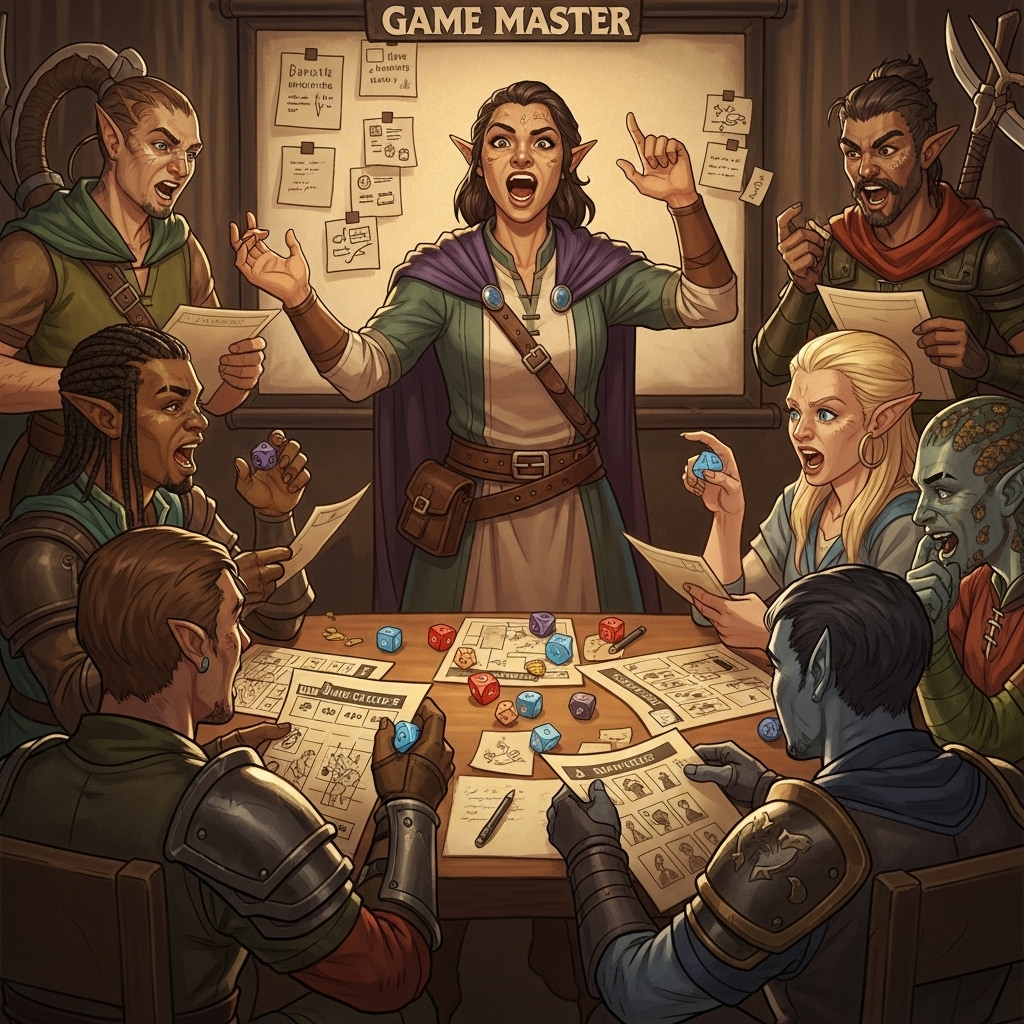
Once your preparation is done and your players are seated around the table, it's time to bring your adventure to life. This guide will help you run smooth, engaging sessions that everyone will remember.
Starting the Session
Session Opening Checklist
- Arrive early to set up materials and space
- Welcome everyone and make sure they're comfortable
- Review last session briefly (if continuing a campaign)
- Set the scene with engaging description
- Ask if anyone has questions before starting
The Opening Hook
Your first few minutes set the tone for the entire session:
- Start with action or tension rather than mundane details
- Engage the senses - what do they see, hear, smell?
- Give players a clear decision point quickly
- Establish the stakes early
Example Opening:
"The tavern door bursts open, letting in a gust of cold rain. A man in a torn cloak stumbles in, his eyes wild with panic. 'Please!' he gasps, 'You have to help me! They took my daughter!' Every patron in the tavern turns to stare. What do you do?"
Session Zero (Optional)
Some groups have a "Session Zero" before playing:
- Discuss expectations and table rules
- Finish character creation together
- Learn about the campaign setting
- Establish character relationships
Managing the Flow
Pacing Your Session
Good pacing keeps everyone engaged:
Vary the Tempo
- High-energy scenes: Combat, chases, urgent decisions
- Medium-energy scenes: Investigation, planning, problem-solving
- Low-energy scenes: Character interaction, shopping, rest
Watch for Energy Levels
- Signs of engagement: Leaning forward, asking questions, taking notes
- Signs of fatigue: Checking phones, side conversations, glazed looks
- Adjust accordingly: Speed up slow scenes, take breaks when needed
Use the "Yes, And" Principle
- Accept player ideas and build on them
- Turn "No" into "Yes, but" when possible
- Reward creativity even when it surprises you
Example:
Player: "Can I try to swing from the chandelier to reach the balcony?" GM: "Yes, and make an Athletics check. If you fail, you'll still make it but the chandelier will crash down, alerting the guards."
Managing Different Types of Scenes
Combat Scenes
- Start with initiative and track turn order clearly
- Describe attacks and damage cinematically
- Keep turns moving - give players about 30 seconds to decide
- Use environmental details to make combat interesting
Combat Tips:
- Know monster stats before combat starts
- Pre-roll damage to speed up your turns
- Describe near-misses as exciting moments, not failures
- Let players describe their killing blows
Social Scenes
- Give NPCs distinct voices or mannerisms (even simple ones)
- Have clear motivations for every NPC
- Let players try different approaches
- Use skill checks to support roleplay, not replace it
Social Tips:
- Don't demand accents - personality is more important than voice
- Ask players to describe their approach before calling for rolls
- Reward good roleplay with advantage on rolls
- Make consequences feel natural
Exploration Scenes
- Describe environments with vivid details
- Reward thorough investigation with useful information
- Don't hide crucial information behind single skill checks
- Use the "Three Clue Rule" - always have multiple ways to learn important facts
Exploration Tips:
- Ask players to be specific about what they're investigating
- Layer information - surface details first, deeper secrets with better checks
- Don't punish curiosity - reward players who engage with your world
- Keep it moving - don't get bogged down in every detail
Making Rulings
The GM's Authority
As the GM, you have final say on rules interpretations:
- Be consistent - similar situations should have similar outcomes
- Be fair - don't favor one player over others
- Be decisive - make a ruling and move on
- Be flexible - you can change your mind if you realize you made a mistake
When You Don't Know a Rule
- Make a quick ruling to keep the game moving
- Note to look it up later
- Ask if anyone knows the rule, but don't debate it long
- Default to what makes sense in the game world
Example:
"I'm not sure exactly how that spell works with that situation. For now, let's say it works but at half effectiveness. I'll look up the exact rule after the session."
Common Ruling Situations
"Can I Try...?"
- Default to "Yes" unless it's impossible or breaks the game
- Set a Difficulty Class based on how hard it should be
- Explain the consequences of failure before they roll
- Remember that failure can be interesting too
Creative Uses of Spells/Abilities
- Encourage creativity but maintain game balance
- Consider the spell's intent and power level
- Allow partial success for creative but overpowered attempts
- Set precedents you're comfortable with for future use
Rule Disputes
- Listen to all sides briefly
- Make a decision quickly
- Stick with it for the session
- Discuss it more after the session if needed
Managing Players
Encouraging Participation
Every player should feel involved:
For Quiet Players
- Ask direct questions: "What does [character name] think about this?"
- Create opportunities that play to their character's strengths
- Give them important information sometimes
- Don't put them on the spot - build their confidence gradually
For Dominant Players
- Redirect attention: "That's a great idea, let's hear what others think too"
- Give them leadership roles that involve supporting others
- Set time limits on planning discussions
- Talk to them privately if the behavior continues
For Distracted Players
- Engage them directly: "The guard approaches you specifically"
- Take short breaks if energy is low
- Address distractions politely but firmly
- Make sure they understand what's happening
Handling Difficult Situations
Rule Arguments
- Stay calm and don't take it personally
- Acknowledge their concern: "I understand your point"
- Make your ruling: "For now, we'll do it this way"
- Move on: "Let's continue with the game"
Player Conflicts
- Address it quickly before it escalates
- Talk to players privately if needed
- Refocus on the game: "Let's get back to the adventure"
- End the session early if necessary to resolve issues
Character Death
- Don't avoid it if it's the natural consequence
- Make it meaningful and dramatic
- Help with new characters quickly
- Allow heroic last stands when appropriate
Improvisation Techniques
When Players Go Off-Script
This will happen - embrace it!
The "Yes, And" Approach
- Accept their idea: "Yes, there is a secret passage..."
- Add complications: "...but it's guarded by an ancient trap"
- Build on their creativity: "...and you notice symbols that match your character's background"
Reusing Prepared Material
- Change names and locations but keep the content
- Adapt NPCs to fit the new situation
- Move encounters to where the players actually go
- Rescale challenges for the new context
The "Let Me Think" Pause
- Take a 5-minute break if you need to adapt
- Ask players to discuss their plans while you think
- Use bathroom breaks as thinking time
- Don't be afraid to say "Give me a moment to figure this out"
Building on Player Ideas
Players often have great suggestions:
- Listen carefully to their theories and plans
- Incorporate their ideas when they make the story better
- Give them credit: "That's exactly what you discover!"
- Let them be right sometimes about their guesses
Session Management
Time Management
- Start on time and end on time
- Take regular breaks (every 90-120 minutes)
- Watch the clock during long discussions
- Plan for slower pace with new players
- Leave time for wrap-up and next session planning
Note-Taking During Play
Keep track of:
- Important NPC names you make up on the spot
- Player decisions that will have consequences
- Plot threads to follow up on later
- Rule interpretations you make
- Great player moments to reference later
Managing Dice Rolls
- Call for rolls when the outcome is uncertain
- Set DCs before the roll, not after
- Let players roll their own dice when possible
- Roll openly for transparency
- Make failure interesting - it's not just "nothing happens"
How to Roll
- State your intent: "I want to climb the wall"
- GM calls for roll: "Make an Athletics check"
- Roll and add modifiers: "I rolled 14, plus 3, so 17 total"
- GM describes result: "You scramble up successfully"
Common Mistakes and Solutions
New GM Mistakes
Over-Preparing
- Problem: Trying to plan for every possibility
- Solution: Prepare situations and NPCs, not exact sequences
Under-Preparing
- Problem: Having no plan at all
- Solution: At least know your NPCs' motivations and the basic plot
Saying "No" Too Much
- Problem: Shutting down player creativity
- Solution: Default to "Yes, and..." or "Yes, but..."
Making it Too Easy/Hard
- Problem: Poor challenge balance
- Solution: Adjust difficulty on the fly based on how players are doing
Forgetting Player Agency
- Problem: Railroading players through predetermined events
- Solution: Present situations and let players choose how to respond
Mid-Session Fixes
If Players Are Stuck
- Give them more information through NPCs or investigation
- Offer multiple approaches to the problem
- Ask what they want to do rather than waiting for them to figure it out
- Introduce a new complication that moves things forward
If Combat is Too Easy
- Add reinforcements that arrive midway through
- Give enemies new abilities or tactics
- Introduce environmental hazards
- Have enemies retreat to a more advantageous position
If Combat is Too Hard
- Reduce enemy damage or hit points on the fly
- Have enemies make tactical mistakes
- Introduce helpful NPCs or environmental advantages
- Give players opportunities to use clever tactics
Building to the Climax
Escalating Tension
- Increase stakes as the session progresses
- Add time pressure to important decisions
- Reveal information that changes everything
- Build to a dramatic confrontation
Satisfying Conclusions
- Give players agency in how the climax resolves
- Make their choices matter
- Provide clear consequences for their actions
- End on a positive note even if they didn't achieve everything
Session Wrap-Up
- Summarize what happened briefly
- Highlight great player moments
- Address any immediate questions
- Plan the next session if continuing
- Thank everyone for playing
Remember the Fundamentals
Your Job as GM
- Present interesting situations for players to navigate
- Play the world and NPCs realistically
- Make fair rulings on rules and actions
- Keep the story moving forward
- Ensure everyone has fun including yourself
What Makes a Great Session
- Player agency - they make meaningful choices
- Appropriate challenge - difficult but achievable
- Character moments - everyone gets to shine
- Story progression - things happen and change
- Fun for everyone - laughter, excitement, and engagement
The most important thing to remember is that you're all there to have fun together. Stay flexible, be generous with your rulings, and don't be afraid to make mistakes - they're how you learn!
Next: Learn about managing story elements and player relationships over multiple sessions.
"I Don't Know the Rules"
Solution: Just describe what you want to do. The GM will tell you what to roll.
Example: "I want to sneak past the guard" → GM: "Roll a Stealth check"