Managing Story and Players
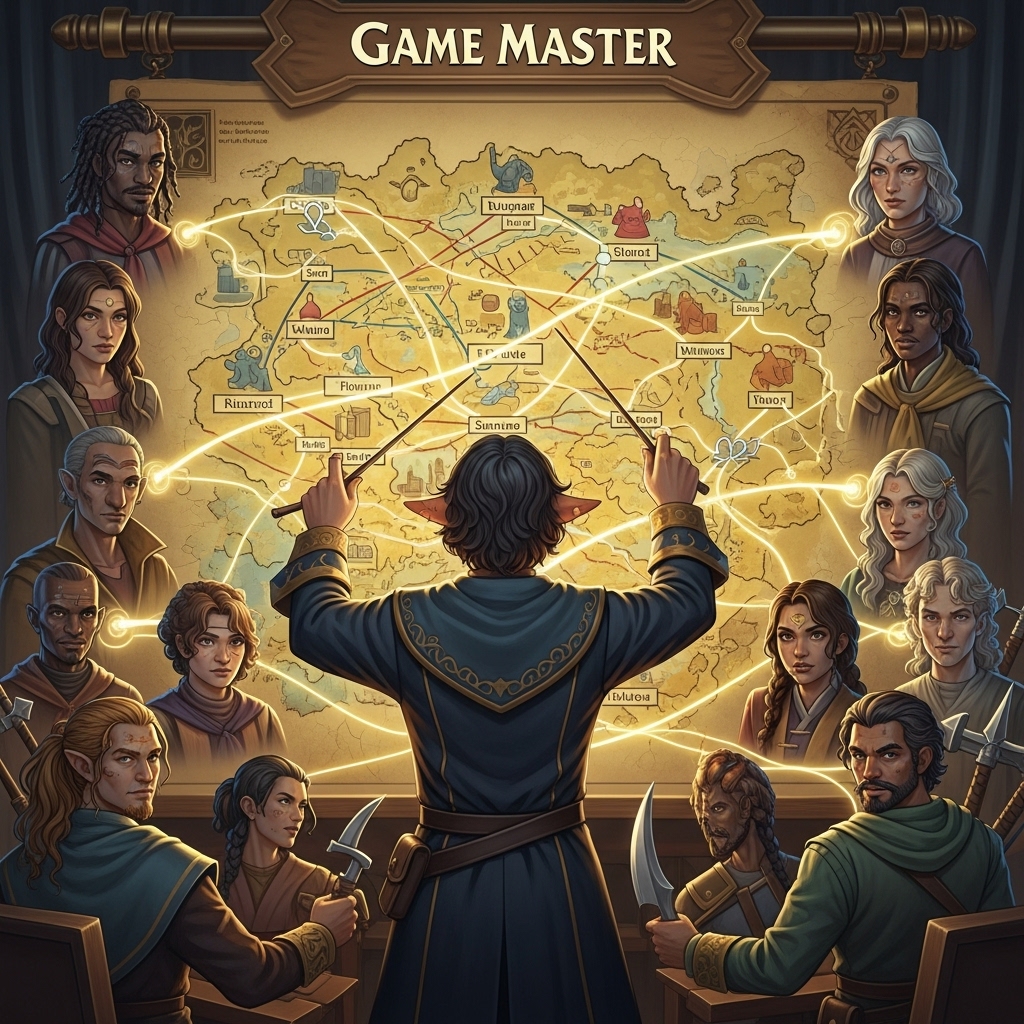
Running great tabletop RPGs isn't just about individual sessions - it's about creating ongoing stories and managing group dynamics over time. This guide will help you build engaging campaigns and maintain positive player relationships.
Story Management Fundamentals
The Living World Principle
Your game world should feel alive and reactive:
- NPCs have their own goals and continue pursuing them between sessions
- Events happen whether or not the players are involved
- Player actions have consequences that ripple through the world
- Time passes meaningfully with seasons, festivals, and changes
Balancing Structure and Flexibility
- Have a general direction but don't plan too far ahead
- Prepare situations rather than predetermined outcomes
- Let player choices shape the story's direction
- Be ready to adapt when players surprise you
The Three-Session Rule
Plan story arcs in three-session chunks:
- Session 1: Introduce the problem and gather information
- Session 2: Complications arise and stakes increase
- Session 3: Climax and resolution
- Then start a new arc or continue with consequences
Character Development and Integration
Supporting Player Character Arcs
Every character should have moments to shine:
Incorporate Backstories
- Review character backgrounds regularly
- Introduce NPCs from their past
- Create situations that relate to their personal goals
- Let their history influence the main story
Character Growth Opportunities
- Present moral dilemmas that challenge their beliefs
- Force them to make difficult choices between competing values
- Give them leadership roles in situations that matter to them
- Allow them to fail and learn from mistakes
Relationships Between Characters
- Encourage character bonds through shared experiences
- Create situations that require teamwork and trust
- Allow for character conflict that strengthens relationships
- Reward players who build on each other's characters
Managing Different Character Types
The Leader
- Give them information to share with the group
- Present situations that require coordination
- Support their decision-making while ensuring others participate
- Challenge their assumptions occasionally
The Loner
- Find ways to integrate them without forcing it
- Give them personal stakes in group objectives
- Create opportunities for one-on-one interactions
- Respect their character concept while encouraging engagement
The Joker
- Appreciate their humor and build on it when appropriate
- Balance comedy with serious moments
- Give them dramatic opportunities to show character depth
- Guide humor that disrupts rather than enhances
The Optimizer
- Challenge them tactically with interesting encounters
- Reward creative problem-solving beyond just combat
- Present situations where optimization isn't the answer
- Value their system knowledge while focusing on story
Long-Term Story Techniques
Building Ongoing Mysteries
- Plant seeds early that pay off sessions later
- Layer clues across multiple adventures
- Let players form theories and occasionally let them be right
- Connect seemingly unrelated events in surprising ways
Recurring NPCs
Create characters that players care about:
- Give them distinct personalities and consistent motivations
- Show how they change based on player interactions
- Bring them back in unexpected ways
- Let relationships evolve over time
Consequences and Continuity
- Remember player choices from previous sessions
- Show the results of their actions in the world
- Keep notes on what happened and who was affected
- Reference past events to create a sense of history
The Campaign Calendar
Track time and events:
- Mark important dates like festivals, seasons, or deadlines
- Plan background events that happen regardless of player actions
- Show the passage of time through environmental changes
- Create urgency with time-sensitive situations
Managing Group Dynamics
Reading the Table
Pay attention to player engagement:
Signs of Good Engagement
- Players take notes and ask follow-up questions
- They discuss strategy and character choices between sessions
- They reference past events and NPCs fondly
- They're excited about upcoming sessions
Signs of Disengagement
- Frequent phone checking or side conversations
- Passive participation - just going along with others
- Missing sessions or arriving late regularly
- Not remembering important story elements
Balancing Spotlight Time
Every player deserves their moment:
- Track who's been featured recently
- Rotate focus between different characters
- Create opportunities for quiet players to contribute
- Don't let dominant players overshadow others
Managing Player Expectations
- Communicate your GM style early
- Discuss content boundaries and comfort levels
- Be clear about campaign tone (serious, comedic, etc.)
- Address concerns before they become problems
Handling Challenging Situations
Player Conflicts
When players clash:
In-Character Conflicts
- Allow reasonable disagreement between characters
- Ensure it enhances rather than disrupts the story
- Help find compromises that satisfy both players
- Don't let it derail the entire session
Out-of-Character Conflicts
- Address privately first if possible
- Listen to all perspectives without taking sides
- Focus on the impact on the group's fun
- Be willing to ask someone to leave if necessary
Problem Players
Different approaches for different issues:
The Spotlight Hog
- Actively redirect attention to other players
- Give them important but time-limited roles
- Talk to them privately about sharing space
- Set clear expectations about participation
The Rules Lawyer
- Appreciate their knowledge while maintaining authority
- Discuss rule interpretations outside of play when possible
- Be clear about house rules and your decision-making authority
- Thank them when they help rather than hinder
The Passive Player
- Directly engage them with questions and opportunities
- Find out what interests them about the game
- Create situations that play to their strengths
- Be patient and encouraging
The Disruptive Player
- Address behavior immediately and clearly
- Focus on impact rather than intentions
- Give clear warnings before escalating
- Protect the group's fun above individual accommodation
When Players Miss Sessions
- Plan for absences by having flexible storylines
- Recap briefly for returning players
- Don't punish attendance with missed story elements
- Keep absent characters involved in reasonable ways
Story Pacing and Campaign Management
Session-to-Session Flow
- End sessions on cliffhangers or clear resolution points
- Begin sessions with brief recaps of previous events
- Connect adventures through ongoing storylines
- Allow downtime for character development and world-building
Managing Campaign Length
- Plan story arcs that can conclude at natural stopping points
- Check in with players about their interest in continuing
- Don't drag out campaigns past their natural conclusion
- Consider sequel campaigns with new characters in the same world
Adjusting Difficulty Over Time
- Scale challenges to character abilities and player experience
- Introduce new mechanics gradually
- Reward player growth with increasingly complex situations
- Don't be afraid to make things easier if players are struggling
Building Player Investment
Make It Personal
- Connect adventures to character backgrounds and goals
- Let players shape the world through their actions
- Remember details they care about
- Show how their characters have changed and grown
Create Meaningful Choices
- Present dilemmas without clear right answers
- Show consequences for both action and inaction
- Let players influence the direction of the story
- Respect their agency even when they surprise you
Celebrate Achievements
- Acknowledge character growth and player cleverness
- Reference past victories in current situations
- Let players describe their moments of triumph
- Show the lasting impact of their heroic deeds
Between Session Management
Preparation Based on Last Session
- Review what happened and where it's leading
- Note player interests and follow up on them
- Prepare NPCs they want to interact with again
- Think about consequences of their recent actions
Player Communication
- Check in about their enjoyment and concerns
- Ask about character goals and interests
- Share your excitement about upcoming story elements
- Coordinate scheduling and logistics
World Development
- Expand areas players have shown interest in
- Develop NPCs they've connected with
- Plan events that happen in the background
- Consider how the world is changing based on their actions
Record Keeping
Essential Campaign Notes
- Character names, levels, and key abilities
- Important NPCs with personalities and motivations
- Ongoing plot threads and how they connect
- Significant locations and their current status
- Timeline of major events and their consequences
Player Achievement Tracking
- Memorable moments and heroic deeds
- Character growth and development arcs
- Relationships formed and strengthened
- Problems solved and challenges overcome
Future Planning Notes
- Story hooks you want to explore
- NPCs you want to bring back
- Locations you want to revisit
- Consequences you need to follow up on
Signs of a Successful Campaign
Player Engagement Indicators
- Players arrive excited and prepared
- They talk about the game between sessions
- They develop inside jokes and shared references
- They care about NPCs and world events
- They're invested in their character's growth
Story Health Indicators
- Plotlines connect and build on each other
- Player choices have visible consequences
- The world feels alive and responsive
- Characters have clear goals and obstacles
- Sessions feel meaningful and interconnected
Remember: Managing story and players is an ongoing process that improves with experience. Focus on creating a collaborative environment where everyone contributes to building amazing stories together. The best campaigns emerge from the interplay between your preparation and your players' creativity.
Next: Learn how to grow as a GM and expand your skills over time.
Time Management
- Start on time and end on time
- Take regular breaks (every 90-120 minutes)
- Watch the clock during long discussions
- Plan for slower pace with new players
- Leave time for wrap-up and next session planning
- Balance different types of scenes (combat, exploration, roleplay)