Lamp
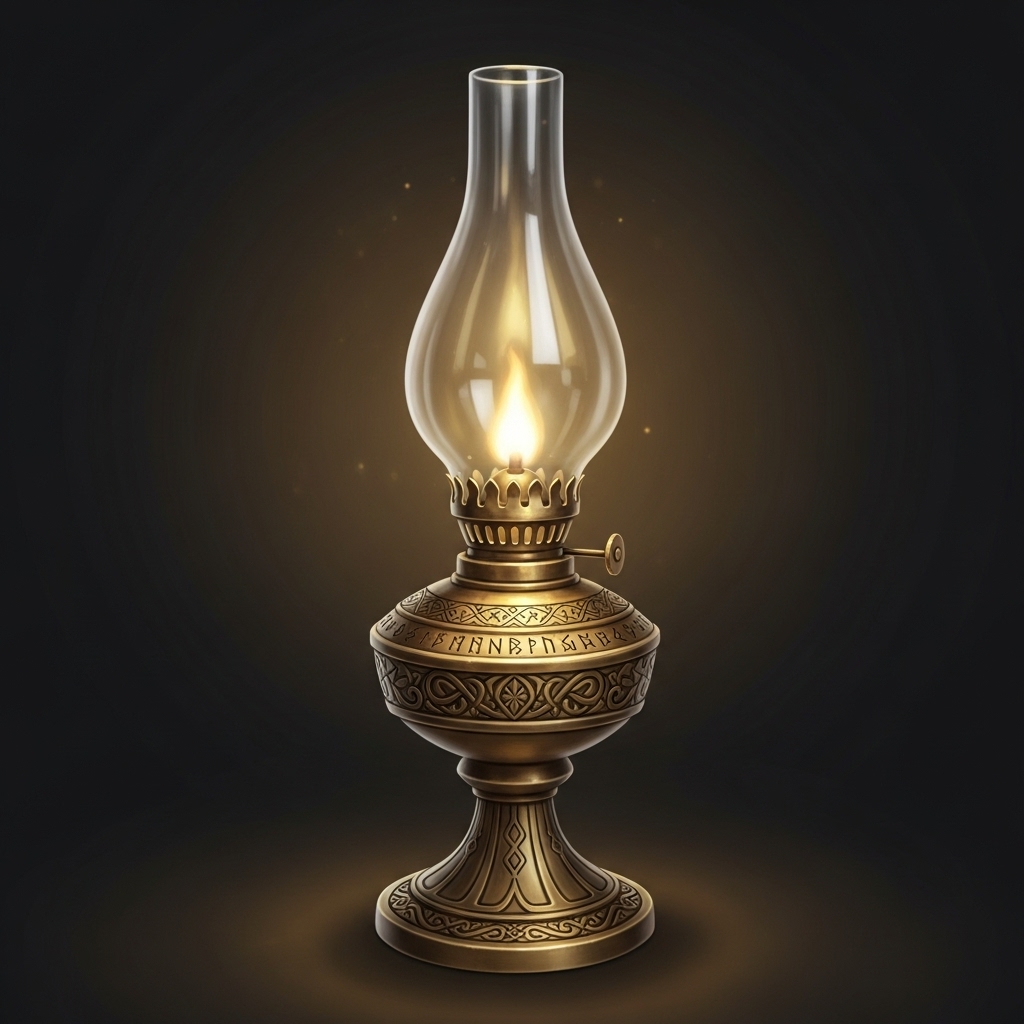
Category: Light Sources
Weight: 1 lb.
Cost: 5 SP
Light Properties: 15-ft bright, 30-ft dim
Description
A lamp is an oil-burning light source consisting of a reservoir for fuel, a wick, and a protective housing. It provides steady, reliable illumination and can burn for hours with proper fuel. Lamps are more sophisticated than torches and offer better light control and duration.
Light Properties
Illumination Range:
- 15-foot radius of bright light
- Additional 15-foot radius of dim light
- Total effective range of 30 feet
- Burns for 6 hours on 1 pint of oil
Light Quality:
- Steady, consistent flame
- Adjustable brightness by wick manipulation
- Protected flame less susceptible to wind
- Even light distribution
Fuel Requirements
Oil Consumption:
- Uses 1 pint of oil per 6 hours of operation
- Oil costs 1 silver piece per pint
- Can be refueled while burning (carefully)
- Various oil types provide different burn characteristics
Fuel Types:
- Standard Oil: Basic lamp oil, most common
- Whale Oil: Burns brighter and cleaner (if available)
- Vegetable Oil: Cheaper alternative with shorter burn time
- Scented Oil: Provides pleasant aroma while burning
Tactical Applications
Extended Operations:
- Long burn time ideal for extended activities
- Adjustable light for stealth or full illumination
- Stable base provides hands-free lighting
- Can be carried or placed for area lighting
Combat Utility:
- Thrown as improvised weapon (5 fire damage if lit)
- Creates area lighting for group combat
- Can be used to ignite flammable materials
- Provides consistent illumination for ranged attacks
Advantages Over Other Light Sources
Versus Torches:
- Much longer burn time (6 hours vs 1 hour)
- Adjustable brightness levels
- Protected flame more wind-resistant
- Cleaner burning with less smoke
Versus Candles:
- Significantly brighter illumination
- More durable and less fragile
- Better suited for outdoor use
- Longer operational duration
Maintenance and Care
Regular Upkeep:
- Trim wick regularly for optimal burning
- Clean glass or housing to maintain light output
- Check fuel levels before important activities
- Inspect for cracks or damage that could cause leaks
Fuel Management:
- Monitor oil consumption during use
- Carry spare oil for extended operations
- Refuel carefully to avoid spills or fires
- Store fuel securely to prevent contamination
Alternative Uses
Practical Applications:
- Heat source for warming small areas
- Cooking aid for heating food or water
- Signal device for long-distance communication
- Emergency fire starter for larger fires
Utility Functions:
- Reading light for studying or research
- Work light for detailed tasks
- Area lighting for camp activities
- Timer (burn rate can measure time passage)
Economic Considerations
Initial Investment:
- Moderate cost at 5 silver pieces
- Durable construction provides long-term value
- Reusable with proper maintenance
- Good balance of cost versus performance
Operating Costs:
- Oil consumption: 1 SP per 6 hours of use
- Occasional wick replacement needed
- Minimal maintenance costs
- More economical than torches for extended use
Safety Considerations
Fire Prevention:
- Ensure stable placement to prevent tipping
- Keep away from flammable materials
- Never leave burning lamp unattended
- Have extinguishing method readily available
Proper Handling:
- Handle carefully when lit to avoid burns
- Allow cooling before refueling
- Check for fuel leaks before lighting
- Use appropriate tools for wick adjustment
Environmental Adaptability
Weather Resistance:
- Housing protects flame from moderate wind
- Can function in light rain with proper cover
- Cold weather may affect oil viscosity
- Hot weather increases evaporation rate
Indoor vs Outdoor Use:
- Excellent for indoor applications
- Suitable for outdoor use with wind protection
- Ventilation important for extended indoor use
- Stable base ideal for camp lighting
Storage and Transport
Portability:
- Moderate weight at 1 pound
- Compact design for easy packing
- Secure fuel reservoir prevents spills
- Handle or bail for convenient carrying
Storage Requirements:
- Store fuel separately when not in use
- Keep wicks dry and protected
- Clean thoroughly before long-term storage
- Protect glass components from impact
Variants and Upgrades
Common Types:
- Basic Lamp: Standard oil-burning design
- Shuttered Lamp: Adjustable light output with shutters
- Safety Lamp: Enclosed flame for hazardous environments
- Decorative Lamp: Ornate designs for formal occasions
- Compact Lamp: Smaller size for reduced weight
Professional Applications
Occupational Use:
- Miners and underground workers
- Night watchmen and guards
- Scholars and scribes
- Craftsmen requiring steady light
- Travelers and explorers
Comparison with Magical Alternatives
Advantages:
- No magical components or spell slots required
- Reliable function regardless of magical conditions
- Familiar technology easily understood and repaired
- Fuel widely available in most settlements
Disadvantages:
- Requires fuel and ongoing costs
- Can be extinguished by environmental factors
- Produces heat and potential fire hazard
- Heavier than magical light sources