Insect Plague
- Level: 5
- School: Conjuration
- Class: Cleric, Druid, Sorcerer
- Casting Time: Action
- Range: 300 feet
- Components: V, S, M (a locust)
- Duration: Concentration, up to 10 minutes
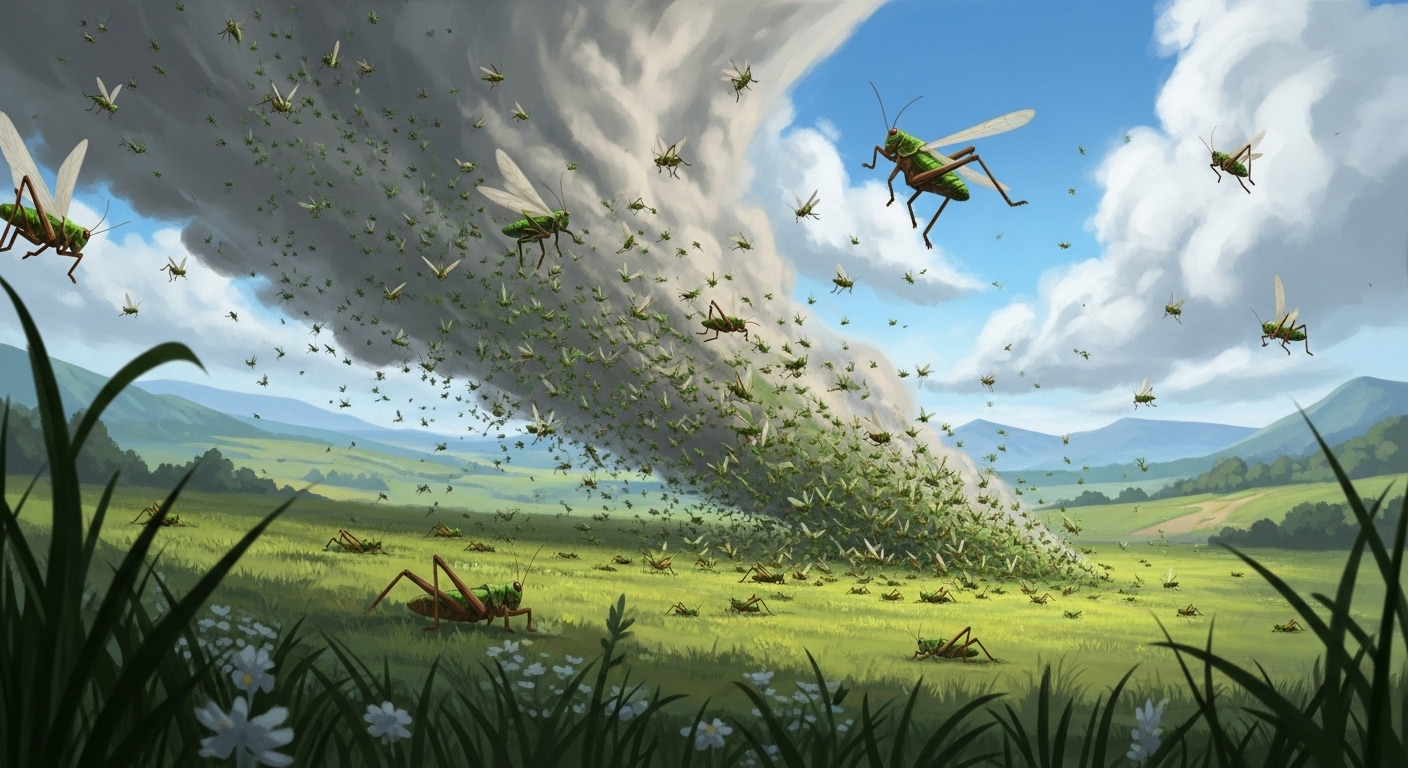
Swarming locusts fill a 20-foot-radius Sphere centered on a point you choose within range. The Sphere remains for the duration, and its area is Lightly Obscured and Difficult Terrain.
When the swarm appears, each creature in it makes a Constitution saving throw, taking 4d10 Piercing damage on a failed save or half as much damage on a successful one. A creature also makes this save when it enters the spell's area for the first time on a turn or ends its turn there. A creature makes this save only once per turn.
Using a Higher-Level Spell Slot. The damage increases by 1d10 for each spell slot level above 5.
Tactical Usage
Persistent Area Control: Insect Plague creates a long-duration area hazard that continuously damages enemies while providing difficult terrain and light obscurement. The 10-minute duration allows battlefield control throughout extended encounters.
Positioning Strategy: The 300-foot range allows safe positioning while maintaining area control. Place the sphere to block chokepoints, protect allies, or force enemy movement into disadvantageous positions.
Constitution Save Exploitation: Many creatures have relatively low Constitution saves, making the spell's damage more reliable than AC-based attacks. Target groups of enemies with weak Constitution for maximum effectiveness.
Spell Combinations
Entangle Layering: Combine with Entangle to create multiple overlapping area effects. Enemies face difficult terrain from both spells while taking damage from the insect swarm, creating powerful area denial.
Web Synergy: Web-restrained enemies cannot easily escape the insect plague area, ensuring continued damage over multiple turns. The combination creates devastating area control with guaranteed damage application.
Wind Wall Protection: Use Wind Wall to protect allies from the swarm while maintaining enemy exposure. The wind barrier prevents insect movement in specific directions while preserving tactical flexibility.
Material Component Details
Locust Symbolism: The locust component connects to biblical plagues and natural disasters, reinforcing the spell's theme of overwhelming natural forces turned to destructive purpose.
Component Acquisition: Locusts are seasonal insects that might be unavailable in certain climates or times of year. This creates interesting preparation challenges and regional considerations for spell availability.
Preserved Specimens: Dried or preserved locusts work for the component, allowing year-round spell availability through proper preparation and component storage techniques.
Creator Notes
Friendly Fire Potential: The spell affects all creatures in the area, requiring careful positioning to avoid damaging allies. Consider party positioning and movement patterns when placing the effect.
Creature Type Effectiveness: Insects might be less effective against creatures with natural armor, elemental immunity, or those that don't rely on conventional biology for survival.
Environmental Appropriateness: The spell works best in outdoor environments where insect swarms feel natural. Indoor or underground usage might feel less thematically appropriate.
Environmental Interactions
Natural Ecosystem: In outdoor environments, the magical insects might interact with local ecosystems, potentially attracting predators or disrupting natural balance during the spell's duration.
Climate Considerations: The spell creates a localized swarm regardless of climate, but cold or hostile environments might affect the thematic appropriateness of insect-based magic.
Structural Interaction: The insects can move through small spaces and openings that solid barriers cannot block, potentially affecting creatures behind cover or in enclosed spaces.
Common Rulings & Clarifications
Once Per Turn: Creatures make saves only once per turn regardless of how long they remain in the area, preventing excessive damage from prolonged exposure during single turns.
Area Persistence: The sphere remains stationary once created, unlike some mobile area effects. This creates predictable area denial that both sides can plan around tactically.
Obscurement Level: Light obscurement imposes disadvantage on Perception checks but doesn't prevent vision entirely, creating moderate visual interference without complete concealment.
Alternative Applications
Crowd Dispersal: The area effect and duration make Insect Plague effective for dispersing hostile crowds or forcing evacuation of specific areas without immediately lethal consequences.
Siege Assistance: The persistent area effect can help break sieges by making defensive positions untenable, forcing defenders to abandon advantageous terrain.
Environmental Storytelling: Use the spell to represent natural disasters, divine wrath, or ecological imbalance in environmental storytelling contexts.
Related Spells
Cloudkill: Similar persistent area effect with poison damage and different movement mechanics. Compare based on expected enemy resistances and positioning requirements.
Spike Growth: Different approach to area denial with piercing damage and stealth components. Choose based on whether damage persistence or concealment better serves tactical needs.
Entangle: Lower-level area control without damage but with stronger movement restriction. Layer with Insect Plague for comprehensive area denial.
Scaling Analysis
Mid Levels (9-14): Insect Plague becomes available and provides excellent area control with consistent damage output. The long duration makes it valuable for extended encounters or battlefield preparation.
High Levels (15+): Upcast versions provide increased damage scaling, though competition from higher-level spells reduces relative effectiveness. Consider for specific tactical situations requiring persistent area control.
Campaign Phase Utility: Most effective during outdoor adventures, large-scale battles, or encounters where area control provides significant tactical advantages over direct damage.
Narrative Flavor
Swarm Manifestation: The air fills with the drone of countless wings as a massive swarm of locusts materializes. The insects move with supernatural coordination, creating a writhing mass of chittering bodies and beating wings.
Overwhelming Numbers: The sheer quantity of insects creates a living wall of movement and sound. Individual locusts are barely visible within the mass, but their collective presence dominates the affected area completely.
Natural Fury: The swarm represents nature's wrath made manifest, with insects biting, stinging, and crawling over everything in their path. The natural plague creates primal fear while delivering consistent physical punishment.